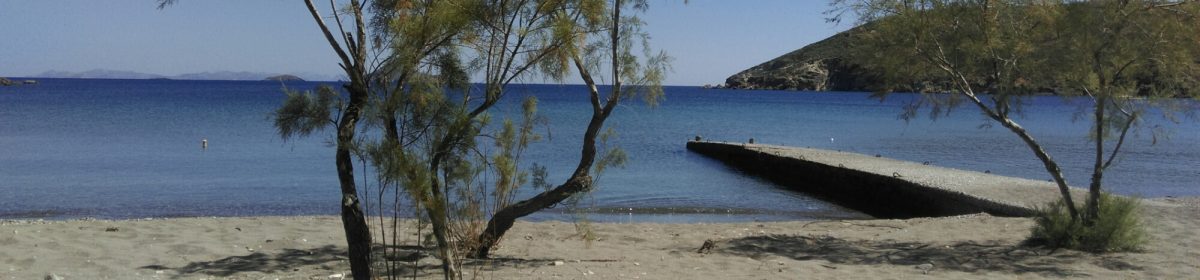
September: a time of new beginnings

When people ask what I have been up to in Greece, I will refuse to be embarrassed. Despite busying myself with real work, writing and gardening, figuring out hiking trails and petting sweet, but sad cats, I’m happy to admit I spent a lot of time staring into the middle distance, relishing wonder and musing over ideas in a state of under-employment. I take nothing for granted and appreciated how it all worked out, after all time is one of the luxury items in modern life.

One of the things I have used this time for is to consider how life in London worked, and didn’t work.  Last week while we were packing up I went through some notebooks I kept last year and earlier this year – I can’t work out if they are the musings of a mad person (likely) or just someone very stuck in a depressive way of thinking (highly likely). It broke my heart to read it and wonder, just how I didn’t address a lot of those things earlier and let them slide?  Some of this stuff is just my own ‘over-thinking’. I know I am lucky to have created this breathing space, I have a shit ton of friends who just get on with it and have a far more complex life, juggling illness, complicated families and tiny tots. I also have friends they have so much outside of work that fulfill them on a deeper level that renders the 9-5 into pale insignificance. I am proud to say every woman I call a friend just lives by the GSD motto (gets shit done) without fuss or humble-brag.  We are constantly told that being still is an idleness, that you must be in perpetual motion, ‘busyness’ is an aspiration status of being in-demand and working all the hours makes you an ‘important person’. It will make you, not break you.  

Yet, a small simple truth I discovered in the act of making life very small and very simple, that time can allow you to refocus and remind yourself what matters – how you want to live.  

Our last 10 days on Syros were spent in a way that blurred the lines between a holiday and just enjoying the simple way of life we have relished there for months. Admittedly we went out a bit more and ate out a little more lavishly than before – but still the nagging idea about how we would feel back in the UK sat heavy on the horizon.

There were hikes to Gramatta and Lia beaches, Kambos and Sa Michalis  – despite the keenness that Autumn was calling, the temperatures stayed hot and the sun fierce.

2017-09-22_02-53-26

There was a calmness to those days, as the traffic reduced and children went back to school, things being put back into places and the fun of summer, not being finished, but certainly winding down. As Syros is mostly visited by Greeks, mid-September is quieter but sees another trickle of tourists arrive from Northern Europe to enjoying the less crowded beaches and off-peak prices. But in the main it was all back to work and school for most people.

2017-09-22_02-53-47

2017-09-22_02-52-48

We packed up our little Greek house and I tidied the garden – plenty still in flower and the aubergine is still producing fruit. I did a final audit of ‘stuff’, carefully keeping the important things and recycling a lot we didn’t need. I spent a little time coaching the cat about fending for herself, the hypocritically feeding her tuna and other treats the needed using up from the store cupboard…bad kitty parent.

https://www.flickr.com/photos/144180115@N07/36574485963/in/dateposted-public/

The day we left was abysmally hot – 33c and humid, like the kind that makes your face sweat, even indoors! We swam early that day – I went out on my favourite bay loop to the two buoys tied together in such a way that they bob together in the waves. I call them the ‘kissing buoys’. In such times there is this horrible adjudicative of naming things ‘the last swim’, ‘the last espresso freddo at KiniTro’, ‘the last sunset’ behind the mermaid statue. It annoyed me by its bell-ringing finality everytime one of us mentioned it as an off-hand comment! By the time we had hugs and well wishes of ‘Kalo himonia’ (good winter), we were in the taxi, the road climbing uphill, the last glance down to the bay, the taxi radio playing ‘Dust in the wind‘ by Kansas (listen to it!) – it was all, just..so, you know…

https://www.flickr.com/photos/144180115@N07/37197215756/in/dateposted-public/

The reality is no one knows what will be our last anything, that’s why everything should be cherished. If there’s one lesson the past 6 months, or even year, has taught me, and often is so obviously overlooked as a cliché. But cherish and be present in everything. As I write this I’m sitting here in my garden in the UK – the sun is shining, an almost impossibly perfect late September day which marks the Autumn Equinox. The sun feels warm, hot even, there is dampness and freshness in the air from last night’s rain – I walked barefoot on the lawn this morning, enjoying its bouncy dampness and bright green freshness, colours that are so scarce on the dry and rocky Greek islands, that I forgot how beautiful they were. The colours of leaves are just starting to turn on the cherry tree – they hold fast – the sunlight bounces off the kitchen windows and reflects from the white patio walls. Days like these are to be cherished and luxuriated in every moment.

Like most of us, I find that questions that weigh one’s mind mostly are the ones that reflect an ideal state rather than the present we inhabit. Women (and men) my age spend an awful lot of time considering; is this the right job for me? Am I challenged enough? What will my next career move be? Where will I be in 10 years time? Am I happy with the next promotion/payrise? Would I like to be a parent? Can I ever afford a house? Will i ever be able to retire? These sorts of internal questions and ways of thinking betray a sense of ‘becoming’ all the time – like you are constantly on your way somewhere and waiting to arrive. Steps to a new role or state of being hangs in the distance like a destination to arrive at, rather than just occupying the space you inhabit right now. This journey-mentality might be the one that causes stasis rather than frees you. I can dig out a load of labels I have arrived at, that I am both happy and unhappy with – my job title, my rank in the pecking order of power and decision making, my income, my education, my marital status, my child-free status, my weight, my height, my class, my accent. It makes me wonder, is this who I am? It is, and yet, in so many ways it isn’t. Life is just made up of small grounded moments that take you out to sea, to the shore, to the path, to get lost and feel small because the world is vast. Life should not be lived using time up waiting for something to happen.  

With this in mind, we used two days in Athens to break the journey up and relax.  It meant we weren’t bothered at all by the late arriving SuperFerry, which although a more comfortable and newer boat than the usual Blue Star that does the daily Syros-Pireaus slog, it takes 45 minutes longer and had difficulties docking in the port which added to the delay. Avoiding any unnecessary baggage pain or stress, G had pre-booked a taxi which greeted us and we then had two nights to ease back into city life. Athens was a small shock to the system and not just because of the heat. The first morning there I awoke and sat with a coffee on the apartment’s small balcony overlooking a cross-street; it was like being immersed in noise and chaos, cars honked and mopeds sped by – police sirens blared and the whole neighbourhood stopped to observe the scene after 2 cars collided in the slow bumper to bumper rush hour traffic. It was certainly an event; builders stopped to shout down what they’d seen, traffic police turned up to cordon off the road and every person stopping at the bakery rubber-necked to see what was going on.  I shuddered at the noise of it all. Only 24 hours later I had been listening to nothing more than the rustle in the pine trees and the cicadas’ chirping – cities are a sensory overload.

https://www.flickr.com/photos/144180115@N07/37214857882/in/dateposted-public/

We arrived back yesterday under clouded grey skies of late afternoon. Watching the houses fall into focus as the plane descended into Gatwick; England looks mostly grey and green from the air, but has a bizarre imposition of order over chaos – everything here has a place and role, streets that are designed in symmetrical forms, even villages look like miniature worlds. Not at all like the ad-hoc buildings across rural Greece that look like they were built without plans, dotting the hills like wild seeds laying root wherever they landed.

Arriving at our house was strange. It was intact but felt empty, it seems (and smells) different, but it is the same. Like waking up and the past six-months were a dream. G just finished unpacking the kitchen stuff and declared, “it’s the same but different”. I suggested it’s the same space but maybe now he inhabits it differently – maybe nothing stands still. Unpacking the bags and getting out our things will take time. But the act of it all makes me feel un-grounded and all out at sea; going from basics and simplicity, back to luxury items like washing machines and toasters and TV’s and everything we have plenty of. Yet living without has proved to me that we don’t really need them. 

I have just pegged the washing out to dry in this sunny weather, it won’t be instantly dry like in Greece, but I can be thankful we can dry them outside still without having to put the central heating on. I feel once that starts, its such a big use of energy and really marks out the seasonal transition. 

On the whole, G and I have both found different benefits to being in Greece. For him, and I hope he won’t mind me saying this; it has been an affirmation of his focus and drive. But more importantly it has been the time he needed to climb out from under the shadow of grief after his father’s death. In many ways we learnt to love and respect each other’s space more – when you live in close quarters without the immediate support network that family and friends take up, you learn to talk more and share more with each other. Don’t worry I certainly won’t be dishing out relationship advice anytime soon.

Somehow in this time away I realised I need to give myself more credit… Yes, you heard that right, the eternal pessimist, always second guessing herself, and listening to the nay-sayers, and if there isn’t any actual nay-sayers, I’ll create them like shadows under the bed. Yep, like some self-aggrandizing t*t, I actually am starting arrive at a place where I get it; be nice to yourself. The whole jumbling tumble mystery of life, is just that. A massive mystery – no silver bullet, just evolving and ever changing, challenges to confront, acceptance of the good and being thankful the positive things that comes your way, hiding away good and kind things in your soul for when things won’t be as rosy – but most of all slowing down and being appreciative of everything you have; My family, my husband, my friends, fighting injustice and caring for the natural environment matter to me, as do words that make sense of this chaos. Perhaps one day I will leave the earth a more beautiful place with something I can create.  

This isn’t some bold epiphany, I am just ready to make it real – there isn’t any ‘nothing is impossible’ rallying cry or positive affirmation. It’s gentler than that. It marks out a way to live.

In the next few weeks I am making a promise to myself to keep the summer alive by writing out more Syros adventures and editing my 1000s of photos.  A small act to stave off the dark days of winter.

Watch this space.

https://www.flickr.com/photos/144180115@N07/36989055240/in/dateposted-public/

The small cyclades – Donoussa

The small cyclades (Μικρές Κυκλάδες) are a set of satellite islands out from Naxos that are some of the smallest inhabited islands of the Aegean. The islands of  Iraklia, Schinoussa, Koufounissi (or Ano Koufonissi) and Donoussa make up the motley crew. They might be less well- known to tourists, but are certainly not undiscovered. Their charms are simple; beaches, relaxation and peace.  But their popularity is growing every year.

2017-09-07_09-17-27

We started the near day-long journey on the Aqua Jewel from Syros at 7am, (the replacement for the Aqua Spirit) this route gave us a 3 hour break for a long lunch in Naxos before hopping on the Express Skopelitis. To say this boat is a bit of legend might be an understatement; it’s been ran by three generations of the same family for 30 years bringing thousands of tourists every season. The historic ferry runs a loop connecting these ‘barren islands’ every few days, a life-line to bring tourists, food supplies and is certainly a big event when the small cyclades ferry enters each port.

IMAG3765

Given how ferocious the meltemi wind has been in recent weeks we were lucky with the weather as it was relatively calm and sunny. Koufonissi was the first stop on the 4 hour long trip, this being the most ‘popular’  island and from what I could ascertain attracts the bigger crowds, with more restaurants and places to stay – it is also better connected with a couple of regular high speed ferries each week. Schinoussa felt even less busy, as much of the island is out of view from where the ferry docked at Mersini with the inhabited Chora 1km further  uphill. On the ‘tour’ route of the Skopeltis we might not have experienced the other islands but it was impossible to miss the deep aquamarine of the sea and the pale sand – making these islands appear at first glance more like the caribbean than the rocky barren Greek Islands they are. Iraklia also similar approach – blue seas and beaches – only a couple of buildings visible at the port but has the largest land mass of the group at 19 sq KM.

20170903_093542

The 13 sq KMs Donoussa seemed like a dry-land paradise by the time the boat docked. What started off as calm waters was shattered after we sailed into a choppy stretch of sea out of the sheltered waters of Naxos and out to the wild open stretch of sea with Amorgos island in the distance . The tiny port Chora of Stavros is the main settlement of the island with a permanent year round population of around 200. It has just one handful of taverna’s and one supermarket – it’s as big of a slice of civilization as you’ll ever need. It being the first week in September we had booked ahead, apparently in August it’s impossible to get a room to rent without advance planning. The garden facing studio at Firoa Rooms was a good call (well done G, you do like booking trips!). The island might not be famous for sunsets of high-end cuisine, but what it does have in droves is peace and charm. The To Kyma Taverna sits over the harbour as an eatery, kafenion and general store,  it’s a family affair with mama in the kitchen and daughter waiting tables, serving as the heart of the village as locals play backgammon and wistful cats wander between the tables. We went here for a quick drink to acclimatise ourselves, but went back several times to eat – great food, no menu’s just whatever the ladies in the kitchen have cooked up that afternoon. We gorged on artichokes, stuffed tomatoes and rooster in wine. Delicious and incredible value.  

https://www.flickr.com/photos/144180115@N07/36731297840/in/dateposted-public/

In the blissful 5 days we enjoyed great traditional local food at Illiovasilema and Meltemi  as well as visiting Captain Georgios for seafood – sampling delicious stuffed Calamari and deep fried shrimps. There was probably 2 more places we could have tried in Stavros, but there’s enough variety to keep your palate satisfied if you were here a week or even two.  Although tranquil and free from mass-tourism, the thing I appreciated were the lack of cars. It was heaven just wandering about and never being passed by more than one or two cars.

20170903_110324

Walking on the island was great – well signposted and decent trails that make up the network of Paths of Cultural Interest. Most of them used to be part of the old mule roads that covered the island and united its four villages, Stavros, Mersini, Messaria and Kalotaritissa. We managed to do the three main hiking trails – the first day we went up over to the beaches of Kalotaritissa which you can do a nice detour up to the highest point of the Island at the peak of Mount Pappas – yes, we managed to time that badly with a particularly hot day and I actually thought I would die at one point on the climb up! But the views were well worth the pain!

20170903_133814

The walk takes you  over some spectacular scenery to the tiny settlement of Kalotaritissa which has one taverna and 5 occupied houses. The beaches were clear and clean and we rested a while to enjoy a swim, before exploring further beaches and the cape. Then we walked back which the climb was steep again, but the sun was lower in the sky and behind us. We also had a chance to have a look at the old mines on the hillside, these were once a huge industry for the island swelling its population into the thousands but closing in the late 1930s . What remains of the mine Spooky and full of goat bones, forcing me to wonder if old goats take themselves off to die quietly in caves?

20170903_181945

The second full hiking day we did the route that connects Stavros to Mersini to then onto Massaria. This is a varied route taking inland hillsides across to the Spring at Massaria.

https://www.flickr.com/photos/144180115@N07/36315378023/in/dateposted-public/

Then on to the amazing beaches at Livadia, and the hidden bay of Fikio. The swimming was perfect, so clear and blue.

20170904_131907

We agreed that this might have been one of the best beaches we’d swam on for sheer out-there-photogenic-ness-in-real-life!

20170904_155647

We had some map issues where we couldn’t locate paths but eventually found our way back on the trail to see explore the old windmill and then down to Kedros beach. We swam in the wreck of the Orion, an old WW2 German boat which was sunk by allied forces – just the hull remains decaying in the bay but still a fascinating place to snorkel.


Donoussa isn’t quite the land that time forgot, it has enough facilities to keep the more peaceful travellers occupied. It thankfully doesn’t have any big hotels or music clubs and retains a small-island atmosphere is reminiscent of a by-gone time.  As tourists we only get to see a small part of an island and experience it in a moment in time, Donoussa has bags of charm and lIke many islands it has suffered from dwindling industry and opportunity, and now turns its hand to tourism to boost its island economy. Over time it has attracted new generations of islanders, returning to set up apartments and businesses. While we were there a village wedding took place on a Saturday, everyone came out to wish the couple well. It seemed like most of the locals attended or were involved in some way, a reminder of what a close-knit community the island still has and one that I hope remains.


What also makes the island unique is a tolerance to that hippie-vibe that tolerates naturism on (most) beaches, there is also a blind-eye turned to free-camping with a surprising amount of tents on the areas behind Kedros and Livadi beaches. This all seems friendly enough, but my only criticism to this is the outward appearance of the tents on the landscape. I know it sounds mean as free-camping trumps an organised beach-bar pumping out music and paid for sunloungers, but it would be better if it was confined to one area like Kedros beach, but we more than once we came across tiny coves with 2 tents taking up the whole beach space. Fair enough, like the first one on the beach rule you can set up wherever you want  – but if some people are there for weeks. This little aspect jarred with me – especially when we went on walks and found little piles of rubbish left over from camping and those intolerable wetwipes left in bushes (no they never biodegrade). Free-camping is great for tourism and the island and environment, if you are responsible and leave no trace.   

https://www.flickr.com/photos/144180115@N07/36315373833/in/dateposted-public/

On our last full day we walked out to Aspro Cavo – the cape of the island which stretches out with some amazing rock formations. It is a very barren lunar landscape, with rocky little pools of water forming salt crystals in the sun and driftwood dotting the landscape . That evening the wind was started to whip up a storm which turned our farewell to the island the next morning into a rather eventful mission.


To say the journey back to Syros was a little rough might be the understatement of the year. The Express ran 2 hours late as it made its way from Amorgos, once onboard we hunkered down below deck while it was battered by waves and Beaufort scale 7 winds for a long 3 hours back to Naxos. Main thing is we survived and weren’t sick (thank you miracle travel tablets and tuc crackers) – I cannot imagine how the hardy crew keep going in all weathers!.


Now, back on Syros and into the September slow-down of the season, I am keen to just realx and enjoy life on dry-land.

Serifos: a trip report

It is a funny thing that we have replaced weekends on long train journeys across the UK with long journeys on ferries for weekends away. It’s a nice shift and also wonderful to be able to have lots of different islands so close, but I do miss the reliability of a train service from A to B, taking a required amount of time. Ferries here can be frustrating, islands are close but yet SOOO FAR as they take quite a bit of figuring out when you can get there and crucially, get back. Syros isn’t on many of the same routes as the fast boats which connect the most popular islands like Santorini and as we wanted to do a couple of more trips before the end of summer (*wails*) we finally chose Serifos and then Donoussa for the following weekend.

I’ll admit my tardiness to writing these blog posts – life has a habit of getting in the way, even here when everything is stripped back to simplicity, work got a bit complicated and poured over into non-work time. I take full responsibility for letting this happen. Saying no and switching off is hard. But I’m happy to say my notebooks are stuffed with ideas and words, so not letting that go was a good priority.

On 27th August we had a late ferry booked for Serifos, taking the Artemis is always a gentle exercise in expectation management. It was 2 hours late in to Syros but we filled the time with a delicious pizza at Amvix opposite the ferry terminal. Arriving into Serifos post close to 11pm wasn’t so bad, the harbourside restaurants were full and lively, which given the serene aspects of the island this was a nice surprise. We stayed in the Medusa Apartments – really spacious and modern place near Livadaki beach with a wonderful view from our terrace.

2017-09-12_01-27-17

Serifos is quite haphazard and scrappy, I mean that in a genuinely affectionate way. The old town, Chora sits up on the hill and you can tell that development in Livadia, the port’s expansion into having more tourist facilities has been quite recent and unplanned – by this I don’t mean they are all shiny and new – they are just cobbled together nicely, in a way I find comforting and natural rather than imposing. On an evening this all comes alive with restaurants and tavernas  all along the front.

https://www.flickr.com/photos/144180115@N07/37041554741/in/dateposted-public/

There are few but not many older buildings, the town hall and high school in the middle. But the area is dominated by the newer low-rise accommodation blocks, like the one we stayed in have been built outwards on plots behind Livadakia beach. It’s compact and all walkable, and isn’t over developed at all. There is 3 or so decent supermarkets and a couple of bakeries – which I visited for croissants and pastries for breakfast.

20170828_110657

After breakfast on the terrace we decided to venture up to the Chora on the well marked path that connects Livadia. It was so windy, the Meltemi was at full gust and whipped around us as we walked up the 4.8k old cobbled path that starts at the back of Livadia. The climb was a bit gruelling, and we were warned by the man who ran our apartments who said most people got the bus up there and walked back down the path! Not one to follow convention we decided to walk there and back!

20170828_110318

It is a perfect example of a Chora settlement, perhaps not as picturesque as others I have visited – but did feel more historic and authentic. As you climb the path, you pass churches and monuments, as well as the old school house and  the folk museum (which was closed as it was a Monday) but they have a mini amphitheatre area out the back for performances and such. There are lots of varieties of architecture, ranging from very ornate venetian in style, like the beautiful Town Hall to many of the traditional single story whitewashed dwellings. The Kastro area at the top is well preserved 15th Century example of a medieval settlement – the views were incredible, right out to Sifnos and Kythnos. But the wind was howling through the streets and sounded very eerie even in the middle of the day.

The Chora does not appear to have any obvious places to stay, but looks like some of the houses have been renovated for tourists. It does have a few good restaurants and bars tucked away, where we sipped greek coffee and gorged ourselves on pancakes. Graeme enjoyed his first ever savoury crepe and I went sweet with the most nutella and banana ever stuffed into one pancake… all calories were needed for the journey downhill!

A few days on Serifos were restorative – after the day walking we rested on the beaches, swam in clear blue sea and sheltered from the ferocious wind. There is plenty to choose from across the compact island, all with soft pale sand and safe waters for swimming. 

https://www.flickr.com/photos/144180115@N07/37128606125/in/dateposted-public/

We sipped ‘happy hour’ gin and tonics at the people-watching heaven of the Yacht Club and enjoyed some great food in Livadia. One worth noting was Metallio (named after the mines which used to be the island’s main industry) – this place is tucked away from the harbour, in an older building with tables on a raised terrace. The menu is stripped back just a few dishes on offer for starter and mains, but well thought out local food with a more gastro feel. We managed to sneak in early without reservations (they are always full so we were lucky), enjoying a range of excellent meat dishes, liver and onions (yes, just like my grandma used to make), mini chicken souvlaki, veal steak,  local goat with aubergine mash and a really decent organic retsina. Highly recommended as something a step up from traditional taverna fare.

IMG_20170829_212624

Our last day saw the wind bring clouds over the island and some very rough seas for the return leg back to Syros – we spent the hour before getting on board the Artemis  necking travel sickness tablets and eating crackers!. Glad to say we survived this one – but it was nothing compared the the adventure the following week on the Express Skopelitis in beaufort scale 7 winds!

https://www.flickr.com/photos/144180115@N07/36292508424/in/dateposted-public/

It was a relief to back on dry land in Kini this week. It has been nice getting back to work and tidying up the garden, making plans and enjoying the time.  All the signs of change are coming into view; sun loungers are being piled up on the beach for next year and two of the seaside cafes have closed already. The busyness of summer is starting to be replaced with cooler temperatures and less people, not only have schools gone back in the UK but schools here went back yesterday too. I woke early this morning to see that dew had formed in the trees overnight, this level of damp humidity overnight meant that towels stayed wet on the line.

All these signs are pointing to Autumn and with that a change in the air…


Syros: walking back in time

Last Friday we set off on a walk so it ended up creating its own nickname “extremehikingfridays” which obviously lends itself to some funny hashtags! At first didn’t mean for the day to be completely absorbed by a hike, but as we were enjoying exploring so much we ended up doing a full loop back to Kini, around 20k in total. Extreme-hiking lived up to its name!

We set off on the first bus from Kini to Ermoupolis at 9am, with a packed lunch, fruit and snacks and plenty of water to keep us hydrated. The route chosen would take us North out of the town, passing tiny hamlets of Richopo, crossing into Ferekidh’s Cave, up to the original settlement of Kastri and then onto the excavation site of Chalandriani. This combined a few of the existing trails mapped as 1, 2 and 3 which we thought gave us plenty of options for finishing it up with either a taxi or walk back to Ermoupoli.

The weather was warm and breezy, so not too hot for walking. But the first section was the ascent through Vrodado and the steps nearly defeated us!

20170827_114423

This leads up to Anastasi which is known as the Church of the Resurrection of the Savior. This blue domed Orthodox church sits astride the hill, opposite the hill top of Ano Syros where Agios Georgios the Catholic Church holds court. Anastasi is dedicated to “Resurrection of the nation”. Built in 1874 by the local architect Dimitris Eleftheriadis, it is very impressive with a mix of Byzantine and neoclassical elements. Once past the 200 step climb we set of walking out of the town through an area called Dhili. Here the houses are a mix of very old and newer constructions, and as you leave the confines of the urban area they start to have more land for agricultural purposes. Once we reached a Panacrandos Church, this is where the path of trail 1 started – the path is well marked and views here are spectacular.

20170818_104237

https://www.flickr.com/photos/144180115@N07/36027032703/in/dateposted-public/

Outwards over the Aegean to Tinos and Andros, taking in Cape Armonos and Agios Demetrios which is the byzantine church looking out to sea and spectacular if you get to pass it on a ferry.  After a while on this barren stone path, we came across a tiny hamlet of Richopo where there are signs to Ferekidh’s Cave (or Pherecydes of Syros as he is also known). A philosopher known as one of the Seven Sages of Ancient Greece, his work contemplated the importance of time (chronos) by using a heliotrope (sun-dial)  village of San Michalis (yep where they make Syro’s famous cheese).  but there is a bust of him in Ano Syros as well. His philosophical musings discussed metamorphosis and the underworld, as well as teaching Phythagras.

https://www.flickr.com/photos/144180115@N07/36439737560/in/dateposted-public/

Pherecydes was a complex character and very little of his written work remains – Scholars disagree on his work so this could be why signs point to his cave, yet the cave doesn’t receive historical site protection. This possibly goes some way to explain why the powers that be decided to build the municipal dump and recycling-centre less than a mile downhill from it! Which has sadly resulted in a million plastic bags are carried away on the wind from the dump and end up littering the amazing path around the cave – this was just such mess and made me pretty angry.

20170818_112026

You get plastic bags with every single purchase here. It would make a huge difference if they’re use was reduced and the authorities did more to protect the rubbish from blowing out of the site and ruining the island. Rant over!

You’ll see from the pics, it is an amazing cave. A real place of contemplation and solitude.

20170818_113726

IMG-20170818-WA0002

From here we scaled inland to Plati Vouni, which is a rural settlement of themonia (houses) closely built together – many households still work on the land, keeping goats and chickens, bring water up from the wells and natural springs. We even spotted a few circular threshing floors as well, although at this time of year all the hay and wheat had been collected. Apart from electricity cables this area would have changed very little in the past 50 years, being very similar to Folegandros and other Cycladic rural villages we have walked through.

20170818_122754

Passing down through a valley we headed out to coast again on route 3, losing our way slightly as we were following this immensely valuable description of the walk. Reaching a lonely house, then the trail leads down and out to the headland to reach the remote beach of Ghilsoura. Even though remote, without a road to it or electricity cables, the house was occupied by a Greek family enjoying a drink on their terrace. We misjudged and took the turn too soon – luckily the family realised what we had done as we tromped through their land, and started waving and pointing us towards the right path! We exchanged pleasantries and thanks. If it wasn’t for their intervention, I am not sure where we would have ended up.

20170818_130433

20170818_131802

The beach at Ghilsoura is magnificent and remote, with pristine pebbles lining the shore – we took a dip here and enjoyed our picnic. This would have been one of the two beaches invaders and pirates landed at when the only settlement of Syros was at the Kastri. We looked around at the back of beach where the trail was meant to rise up to the Kastri, but the path is almost completely hidden! It doesn’t make itself known until you are right infront of it and see the red arrows marking the path. The Kastri rises from the top of the summit making it the perfect place to spot any threats and by time any invader reached the top, they’d be tired!.

20170818_141646

Dating back to the Early Cycladic period the Kastri would have been not only a fortress to protect the islanders, but also a village where the daily ritual of life went on. There have been numerous excavations over the years including the discovery of the Acropolis area at the top of the site and a graveyard with about 600 tombs. Some of the ceramic vases, stone and metalwork fragments are held by the Syros Archaeological Museum and reveal it was a sophisticated society.

https://www.flickr.com/photos/144180115@N07/36439749070/in/dateposted-public/

The climb to the top reveals its charms and practicality – no pirate invader could make it to the top without being seen! The views from up high are its main vantage point – out to sea and inland across the island. To get a real explanation of the Kastri’s scale I found a good photo here . When you are exploring it you don’t get the full sense of its scale so was good to see that aerial image beforehand and wander round accordingly.

20170818_142208

Here we came across 4 fellow walkers which is a rarity on our travels. These Greeks asked us where we had walked from and were surprised to hear we walked all the way from the town (rightly so as we’d already done 8k!) They had parked their car at Chalandriani and walked over, which is a steep 30 minute which does make the site accessible for even non-walkers. But I found walking there past the smaller hamlets first gives you a better sense of the variety of landscapes on this compact island.

After this we scaled uphill to Chalandriani which is also a small settlement and site of a large excavation. A few houses remain occupied here and terraced land dominates the view.

20170818_154523

The excavations in Chalandriani started in the late 19th Century by archaeologist Christos Tsountas  and the findings from the village are considered one of the most important in Cyclades. Figures and pottery from this site are displayed across the world on loan from their home in the National Museum in Athens. I even managed to see some pieces from Chalandriani in the Ashmolean Museum on my last visit to Oxford. So it was great to see the site they came from – although there isn’t much to actually see here.

From this road junction where the trail 3 ended, we made the epic decision to walk back to Ermoupoli, but heading on an alternative route back that passed the settlements of Kiperousa, Senero and Finikia. Although this cut through on the road this is a stretch of the island that is fairly quiet especially mid-afternoon.

20170818_160909

Once you reach Finikia, this is a few old abandoned houses and newer farms which would have been in a valley, possibly with a Spring to supply irrigation. It has the tell tale signs of a seam of lush green trees growing through the middle of the valley. It was blissfully quiet and at the same time has a ghostliness quality to it, as you walk past you can imagine life in the abandoned 19th Century dwellings and mules using the paths marked by dry stone walls. All of the paths which wind up and down would have carried goods and livestock to the markets of Ano Syros.

20170818_165914

20170818_164832

As the road corners towards Ano Syros this area is really interesting as it still has the remains of windmills. One has been kept intact and sits proudly overlooking the valley. But its doors are locked and marked by a sign saying it was restored by the Municipality. We took the steep path up to the peak of the hill where the remains of three windmills stand and then on to Alithini.

https://www.flickr.com/photos/144180115@N07/36836057605/in/dateposted-public/

The views here are breathtaking – from it you get a sense of all the histories of the island merging into one modern personality. From the medieval settlement, growing and expanding through the 18th Century in it’s industrialist heritage. Ermoupoli stretches out as a meeting place of both its the rural and urban populations, defined by many people who came as immigrants, changing the islands fortunes, religion, cuisine and culture.

20170818_175642

In Alithini, we found a path marked trail 10 which would take us up over the final hill, past the out of action wind turbine and down into Kini. This path is one of the sparse remains of the original path network that even up to the 1960s workers from Kini would have used daily. It has two options; Alithini to Kini or heading up to Aghia Varvara and then turning at Piskipio and down into the shipyards and factories of Ermoupoli – a route of 8k each way. Imagine that as a daily commute to work!

During the Italian occuoation of Syros in the Second World War, as vehicles were a still a rarity on the island, Italian soldiers would have used the old path network to solicit food from farmers and transport goods by mule. As you walk these routes which connect villages and churches on worn cobbles and marbled stones, sometimes with carved steps and bare earth, it impossible not to imagine the lives of those Syrians who walked them everyday.

By the time the sun was low in the sky we reached the bay of Kini. There was only one option, taking our aching legs and heading straight for a rewarding beer !

#extremehikingfridays watch this space for more adventures!


Food and seasonal eating

How have I been here this many months and not talked about food as often? Given that it is the one thing that is forever on my mind, I am surprised.

Daily ‘bread-gate’ is just a fact of life here. By way of explanation, this is is the bread delivery at the village mini-market, which took me a while to figure out the intricacies of its schedule with a few questions and observations. Bread gets delivered from the bakery in town at around 8am – but if you leave it to after 9am to try get some they may have sold out, leaving you at the mercy of buying long-life sliced bread (acceptable only for cheese toasties in my view). Trick is it to get there at 8.15 in a scrum of elderly villagers to get the choice of loaves; wholewheat, seeded, crusty white, something ciabatta-like, sesame etc etc. Sunday is the day of rest so no bread deliveries at all, meaning people buy double quantities of loaves on Saturdays. Got it? G refuses to even participate in this ritual – he sees it as a weird thing ‘bread is bread’ (he would be happiest eating white sliced bread that tastes like cotton). But I stick to my principles in fetching in the bread, because fresh bread matters to me!

This week I have dedicated a lot of time to food, no I don’t mean hours gorging on it, well not ‘hours!’, but  time spent wandering around markets and shops, and looking for recipes. Last week I made Halva from a really simple 1 2 3 4 recipe (based on 1 part oil, 2 parts semolina, 3 parts sugar and 4 parts water) I kept it simple and omitted the raisins and almonds. But it was a tasty sweet treat and one I’ll make again.

2017-08-19_01-15-04

In a bookshop in Ermoupoli I bought a really facinating cook book from the Women’s Agrotouristic Cooperative of Syros who run the To Kastri Taverna. Enchanting Food Tales from Syros is exactly that, as it narrates short tales from 3 generations of the same family as the shared recipes are passed down. The stories are wonderful slices of life as they centre on seasons or local celebrations throughout the year, and the corresponding recipes are very seasonal: it includes everything from Magiritsa (Easter soup) to Vasilopita (St Basil’s new year pie), as well as favourites like Greek salad and stuffed courgette flowers. Loads of dishes I can’t wait to try out.

2017-08-19_01-09-56

This week we finally had one ripe red tomato that made it into a salad. Yes, it was unarguably the best tomato I have ever tasted. Despite the odds of a challenging garden and the climate,  it might be one of the few we manage so has to be enjoyed! On the plus side, my hand pollination of a courgette has led to one being a substantial size and ready for picking! Vegetable celebrations all round.

I think the seasonality of local fruits and vegetables has been what really interests me in cooking in Greece. When we first arrived we had fresh strawberries cheaply available, then Cos lettuces, followed by courgettes and local cherries in May and Apricots in June. Availability and price follows the seasonal harvest in a logical way. Its not impossible to get things from the bigger supermarkets here and you can get imported goods from all across the world should you need them. I can genuinely say I have learnt to appreciate this at the fruit market – scan around for the seasonal stuff and adjust recipes to match. August is great for nectarines, figs, peaches and melons are abundant , but you won’t find a strawberry for love nor money! By eating seasonally when produce is at its cheapest it does make a big difference. I am finding that the tastiest recipes always benefit from ingredients when freshly harvested, in the right season and are much cheaper than the UK.  I’ve made a lot of aubergine and courgette bakes with Kefalotyri grated and feta cheese on top – just fry the veg first in olive oil, throw in some garlic and chopped tomatoes, bake in the oven for 20 mins until the cheese melts and gets crispy. Perfect with a salad and fresh bread…I am obsessed! (it finds a way into every food photo)

2017-08-19_01-13-47

2017-08-19_01-12-08

I am also in a phase of reading about the history of Syros, I ploughed through Sheila Leceours fascinating study of Ermoupoli during the Italian occupation, ‘Mussolini’s Greek Island‘ which reveals the mechanisms of Italian occupation and the tragic famine which resulted in nearly 6,000 deaths. It helps you to see Syros in a different light from the beauty we are shown as visitors, and understand its social and cultural complexities. Visiting the Industrial Museum last weekend also added to my enthusiasm. The museum houses a fascinating collection of tools, machinery and artifacts that show how advanced manufacturing, printing and textile trades were in this once flourishing town.

2017-08-19_01-11-01

Given that a plan to electrify Ermoupoli in 1900 was underway at a time when most towns across Europe were decades away from such modernity. It has really interesting history that is being brilliantly preserved and celebrated. It also has copies of Cicladi the daily paper printed during the Italian Occupation.

2017-08-19_01-11-23

Its not all textbooks and cookbooks, I have also been reading a lot of ex-pat books about Greece. This is a whole genre – one you buy one, Amazon then makes a point of telling you about the 100 more they recommend, having read a few, I can say they are of varying quality and intrigue. The latest one by Rob Johnson  A kilo of String is quite a fun and informative book about how he and his partner, Penny moved to the Peloponnese to buy an olive grove. All very fascinating vignettes about the tribulations of the olive harvest (horrific, back breaking work apparently!) As the title reveals, string is another thing bought by the kilo here in Greece. Like wine and olive oil – measured out in a fashion that closely resembles a litre (almost but not quite).  Anyway what I liked about Rob’s book is that he references a great motto which I think sums up Greece for a lot of people who live or spend time here. “Everything is difficult, but nothing is impossible”  Its a nice reminder of just getting on and focusing to get through the difficult bits of life. It’s also a bit more optimistic than a Greek saying “Τι να κάνουμε” – which translates as “what can be done?” Often overheard when Greeks talk about difficult challenges, and politics, more often than not accompanied by a shrug of the shoulders to display the futility of it all…

As the season winds down and the yellow glow of August light fades, whatever happens after the summer is likely to be difficult. Until then we have each day – the sun will rise, I will fetch bread, we will eat and enjoy the fruits of Greek life at its fullest.

Like growing the courgette and tomato on a barren patch of land, however difficult, was not impossible after all.

2017-08-19_01-09-12